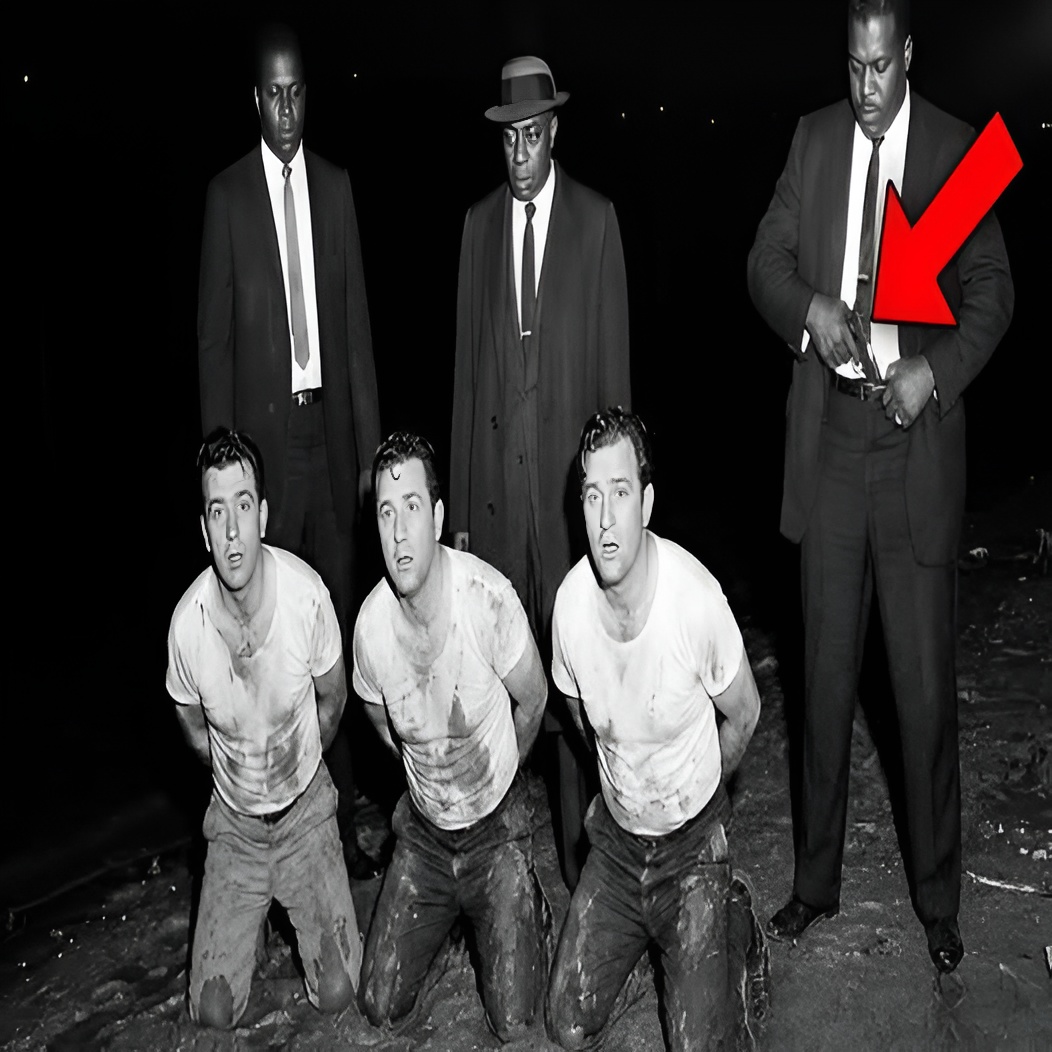
” They MURDERED 18-Year-Old Ruby Williams — What Bumpy Johnson Did in 3 Days Made Police LOOK AWAY…….”
June 4th, 1946, 238 a.m. Marcus Williams apartment, 135th Street, Harlem. Marcus Williams sat at his kitchen table staring at a loaded 38 revolver. The gun had cost him $47 at a Bronx pawn shop. Money he didn’t have. money he’d scraped together because tonight he’d made a decision. His daughter Ruby was dead, 18 years old, murdered, her body dumped in a railroad yard like trash.
The police had made him identify her corpse at the morg, then asked if she’d been involved in prostitution. his Ruby, who wanted to be a teacher, who’d never missed a day of school, who read books every night before bed, and the cop was asking if she was a prostitute. The police report said colored female, approximately 18 years old.
Evidence suggests prostitution related incident. No suspects, low priority. No investigation, no justice, just a file closed before it even opened. So Marcus bought a gun. He was going to find the men who killed Ruby and kill as many as he could before they killed him. At least he’d die trying. Behind him from the bedroom, his wife Evelyn was crying.
Had been crying for 5 hours straight. Hadn’t stopped since they brought her home from the morg. Mark. Her voice was so quiet he almost didn’t hear it. He turned. She stood in the bedroom doorway, her face destroyed by grief, hands shaking. Call him, she whispered. Marcus shook his head. No, Mark. Please, Evelyn. I’m not calling Bumpy Johnson.
I haven’t spoken to him in 10 years. He’s a gangster, a criminal. I’m not. Police don’t care. Evelyn’s voice broke, fresh tears streaming down her face. The courts don’t care. Nobody in this whole goddamn city cares that our ruby is dead. Nobody cares that they beat her, that they she couldn’t finish.
Collapsed against the doorframe, sobbing. Marcus stood, went to his wife, held her while she shook. “I won’t let them get away with it,” Marcus said. “I’ll find them. I’ll You’ll die.” Evelyn whispered against his chest. “You’ll take that gun and you’ll die. And then I’ll have lost both of you.
and Ruby’s killers will still be walking free. Then what am I supposed to do? Marcus’s voice cracked. Tell me, Evelyn, what the hell am I supposed to do? Evelyn pulled back, looked her husband in the eyes. Call him. Call Bumpy. He’s the only person in this city with the power to make this right. The only person who will actually do something. Please, Mark, for Ruby.
Marcus stared at his wife for a long moment. Then he looked at the gun on the table, then back at Evelyn. He walked to the phone with shaking hands and dialed a number he’d sworn 10 years ago he’d never call again. A number he’d memorized anyway, just in case. Because deep down Marcus Williams had always known that someday something terrible would happen that the law couldn’t fix.
And when that day came, there was only one person in Harlem powerful enough to deliver real justice. The phone rang once, twice, three times. Then a voice answered, deep, calm, immediately recognizing who was calling, even at 2:30 in the morning. Mark. Marcus Williams voice broke completely. Bump. They killed my ruby.
Silence on the other end. 5 seconds that felt like forever. Then Bumpy Johnson’s voice, quiet and cold as a January grave. I’m coming. The line went dead. Marcus put the phone down, walked back to the table, unloaded the 38 revolver, put the bullets in his pocket, put the gun back in its box because he understood now he wasn’t going to need it.
Bumpy was coming, and the men who murdered Ruby Williams had maybe 3 days left to live. To understand what happened over the next week, to understand why the Harlem River ran red with blood for three days, you need to understand who Ruby Williams was. Ruby wasn’t just another victim. Wasn’t just a name in a police report.
She was 18 years old, a recent graduate of Wadley High School on 114th Street, top 10 in her class, National Honor Society. She’d been accepted to Howard University in Washington, D.C. with a full scholarship to study education. The scholarship covered tuition, room, and board, everything Marcus and Evelyn could never have afforded on their own…………
Marcus Williams sat alone at the small kitchen table in his apartment on 135th Street. In front of him lay a revolver he had bought only hours earlier, paid for with money he did not have and never expected to spend.
His daughter Ruby was dead.
She was eighteen years old.
Her body had been found the night before in a railroad yard in East Harlem. Marcus and his wife, Evelyn, had been taken to identify her. While they stood in shock, the police asked questions that stunned them—questions that assumed things about Ruby that were not true, questions that felt less like an investigation and more like an excuse.
By morning, the case was already treated as unimportant.
The report was brief. No suspects. No follow-up. Low priority.
Marcus stared at the gun because he could not see another option.
Behind him, Evelyn had been crying for hours. When she finally spoke, her voice was barely audible.
“Mark,” she said. “Call him.”
Marcus shook his head. “No. I won’t.”
“You can’t do this alone,” she whispered. “And the police aren’t going to do anything.”
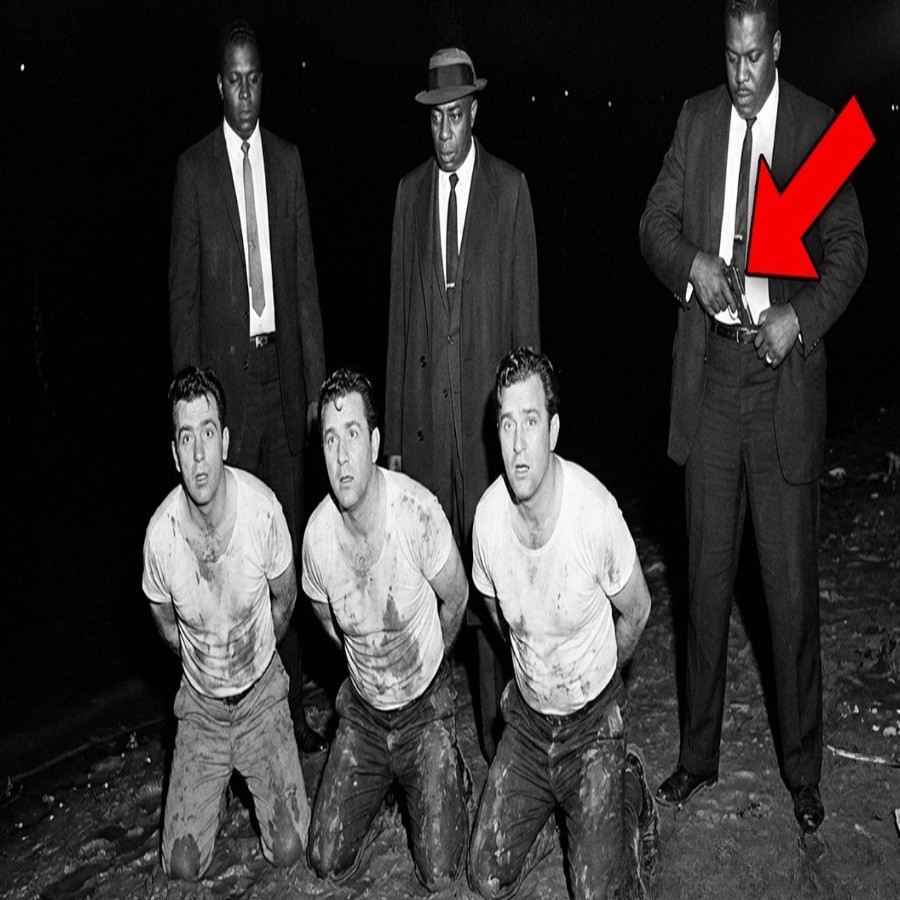
“I haven’t spoken to him in ten years,” Marcus said. “He lives in a world I left behind.”
Evelyn stepped into the kitchen doorway. Her face was hollow with grief.
“Nobody in this city cares that our daughter is gone,” she said. “If you walk out with that gun, I’ll lose you too. And Ruby will still be just another name in a file.”
Marcus felt his resolve collapse.
“Call Bumpy,” she said. “Please. For Ruby.”
Marcus walked to the phone and dialed a number he had sworn never to use again.
The line rang three times.
“Mark,” the voice said quietly.
Marcus could not control himself anymore. “They killed my daughter.”
There was silence.
Then the voice replied, steady and unmistakable.
“I’m coming.”
Marcus put the phone down and slowly unloaded the revolver. He understood now that he would not need it.
To understand what happened next, it is important to understand who Ruby Williams was.
Ruby was not a statistic. She was not a rumor. She was not the kind of girl the police report described.
She had just graduated from high school near the top of her class. She had been accepted to Howard University with a full scholarship to study education. She wanted to become a teacher and return to Harlem to help children who grew up where she had.
She worked part-time at the Harlem Library, shelving books and helping visitors. She sang in the church choir every Sunday. She carried books everywhere and believed deeply that effort and education mattered.
Marcus worked for the postal service. Evelyn cleaned houses. They lived modestly and followed the rules. They believed the system would protect their daughter.
On Sunday afternoon, June 3, 1946, Ruby left church and walked her usual route through Harlem. She never made it home.
Witnesses later said the incident happened quickly. People saw enough to feel fear—but not enough to believe the police would help them if they spoke up. So they did what people often did in Harlem in 1946.
They looked away.
That night, Ruby’s body was found.
By Tuesday morning, her case was already considered closed.
Bumpy Johnson arrived at Marcus Williams’ apartment just after 3:00 a.m.
He came alone.
He listened while Marcus and Evelyn told him everything—the disappearance, the identification, the questions, the report. He did not interrupt.
When they finished, he asked one question.
“Are the police investigating?”
“No,” Marcus said. “They’re not even pretending to.”
Bumpy walked to the window and looked out at Harlem.
Then he turned back.
“I need to know if you’re ready for what happens next,” he said. “Because what I do won’t be official.”
Marcus answered without hesitation. “Yes.”
Bumpy nodded.
“Three days,” he said. “Maybe four.”
What followed did not appear in newspapers as a story of justice.
It appeared as something else.
Over the next several days, five men connected to street-level criminal activity in East Harlem disappeared. Their names circulated quietly. Their routines were known. Their movements were predictable.
By the end of the week, bodies began appearing along the Harlem River at different points between 125th and 155th Streets.
Each discovery followed the same pattern.
Each body carried a note.
The note did not threaten. It did not boast.
It named Ruby Williams. Her age. The date she died. And a message that made the connection impossible to miss.
Police officers working the scenes understood immediately what this was about.
So did everyone else.
Detective Robert Walsh had worked Harlem for nearly two decades. When the fifth body was recovered, he stood by the riverbank and stared at the water.
Captain Riley joined him.
“Five in three days,” Riley said.
“Five men connected to Ruby’s case,” Walsh replied.
“Can we prove that?”
Walsh looked at him. “Do you want to? Because proving it means admitting what we did—or didn’t do—when Ruby died.”
Riley was silent.
The official statement later described the deaths as internal gang violence. No suspects. Investigation ongoing.
Ruby Williams’ case remained closed.
On Saturday, June 15, 1946, more than three thousand people gathered at Abyssinian Baptist Church for Ruby’s funeral.
Many of them had never met her.
They came because Ruby had become something larger than herself.
She had become a symbol of what happened when the system decided a life did not matter.
The eulogy spoke about Ruby’s promise, her discipline, her future. It spoke about how easily dignity could be erased by assumptions.
It did not name Bumpy Johnson.
It did not mention the river.
But everyone in the church understood.
After the service, Marcus saw Bumpy standing quietly at the back.
They did not speak much.
“I kept my promise,” Bumpy said simply.
Evelyn asked one question. “Did they understand?”
“Yes,” Bumpy replied.
Ruby was buried that afternoon as Harlem stood in silence.
The story did not live on in court records.
It lived in memory.
In barber shops. In churches. In conversations passed carefully from one generation to the next.
Five men had taken a young woman believing no one would care.
The system confirmed that belief—until Harlem did not.
For years afterward, the lesson was understood without being spoken aloud.
Some lines, once crossed, could not be crossed again.
Ruby Williams’ name did not disappear.
And in Harlem, her story became a reminder that when institutions fail, communities remember—and sometimes act—so that the failure is not repeated.